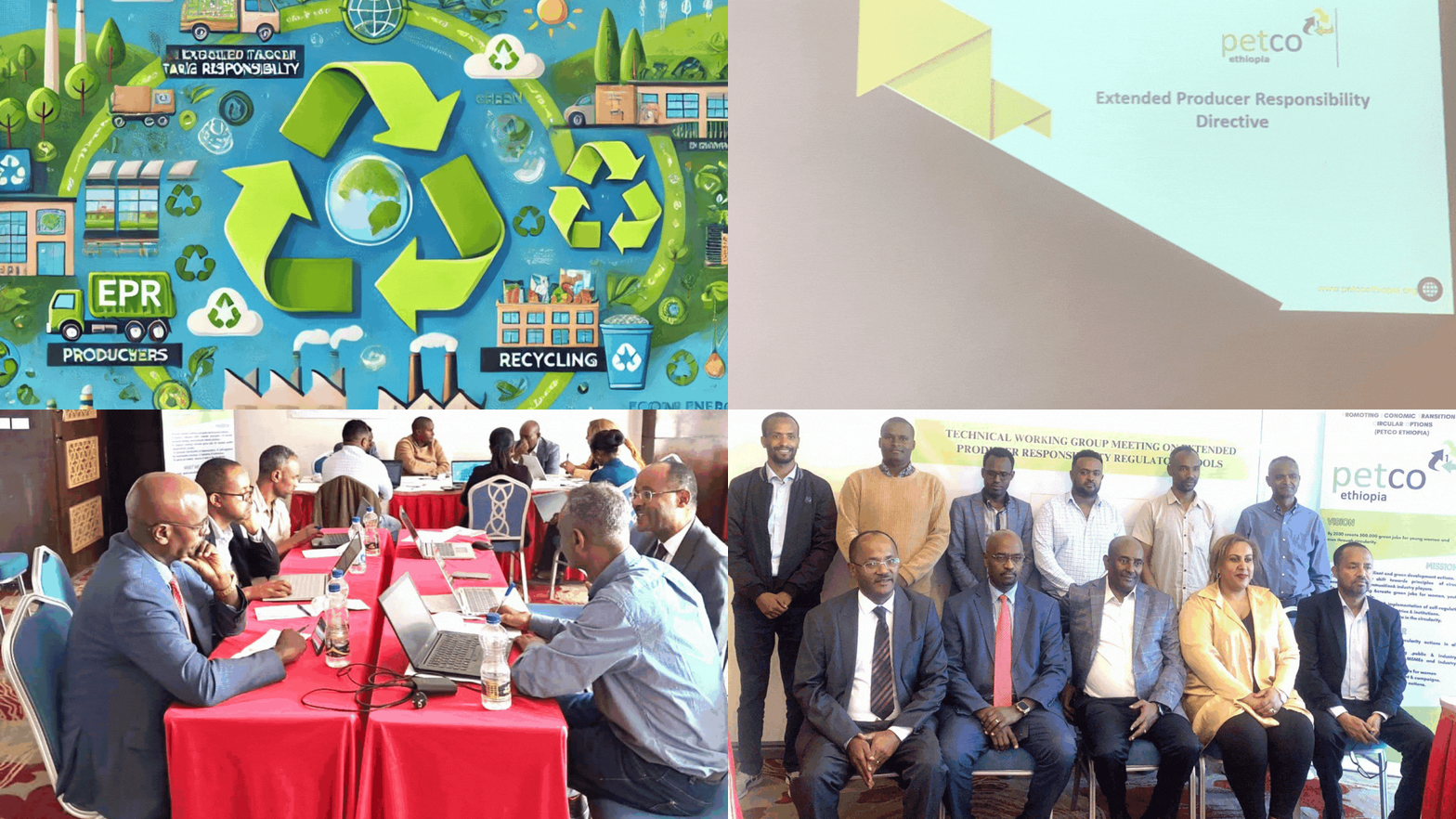
Extended Producer Responsibility (EPR) is a powerful policy approach that holds manufacturers accountable for the entire lifecycle of their products, especially after consumer use. While still emerging in many nations, EPR has been pivotal in transforming waste management practices globally for decades. By shifting the burden of waste management from municipalities and taxpayers to producers, EPR ensures responsible disposal and recycling costs are covered.
🔍 Learning from History: Germany's experience in the 1990s serves as a valuable case study. Faced with overflowing landfills, Germany introduced EPR for packaging waste, catalyzing private investments and resulting in approximately 500 recycling plants, including around 200 dedicated to plastics.
Imagine how much jobs are created in the value chains while protecting environment. This demonstrates how EPR can strengthen waste management capabilities and enhance recycling rates. Ethiopia's Journey: Ethiopia has recently embraced EPR, particularly for electrical and electronic waste, reflecting a global trend of integrating EPR into environmental policies. However, challenges remain, such as "free riders" that exploit the system without contributing to waste management costs, placing additional strains on local governments and taxpayers.
🔄 The EPR-Infrastructure Connection: For EPR to thrive, a robust waste management infrastructure is essential. Unfortunately, many developing nations face the misconception that funding for infrastructure must precede EPR implementation. This presents a classic dilemma: Should EPR or infrastructure come first?
The Path Forward: Implementing EPR can create clear recycling targets, even for less desirable waste streams, attracting private investment. Countries like Sweden and the Netherlands have successfully integrated EPR, leading to improved recycling rates and reduced landfill waste.
The message for developing countries is clear: waiting for infrastructure to be fully developed before implementing EPR is not the answer. Instead, EPR can provide the necessary framework and funding to build effective waste management systems. By leveraging EPR, nations can create self-sustaining ecosystems that manage waste efficiently and foster sustainable economic growth. 💚